Start with meals per day
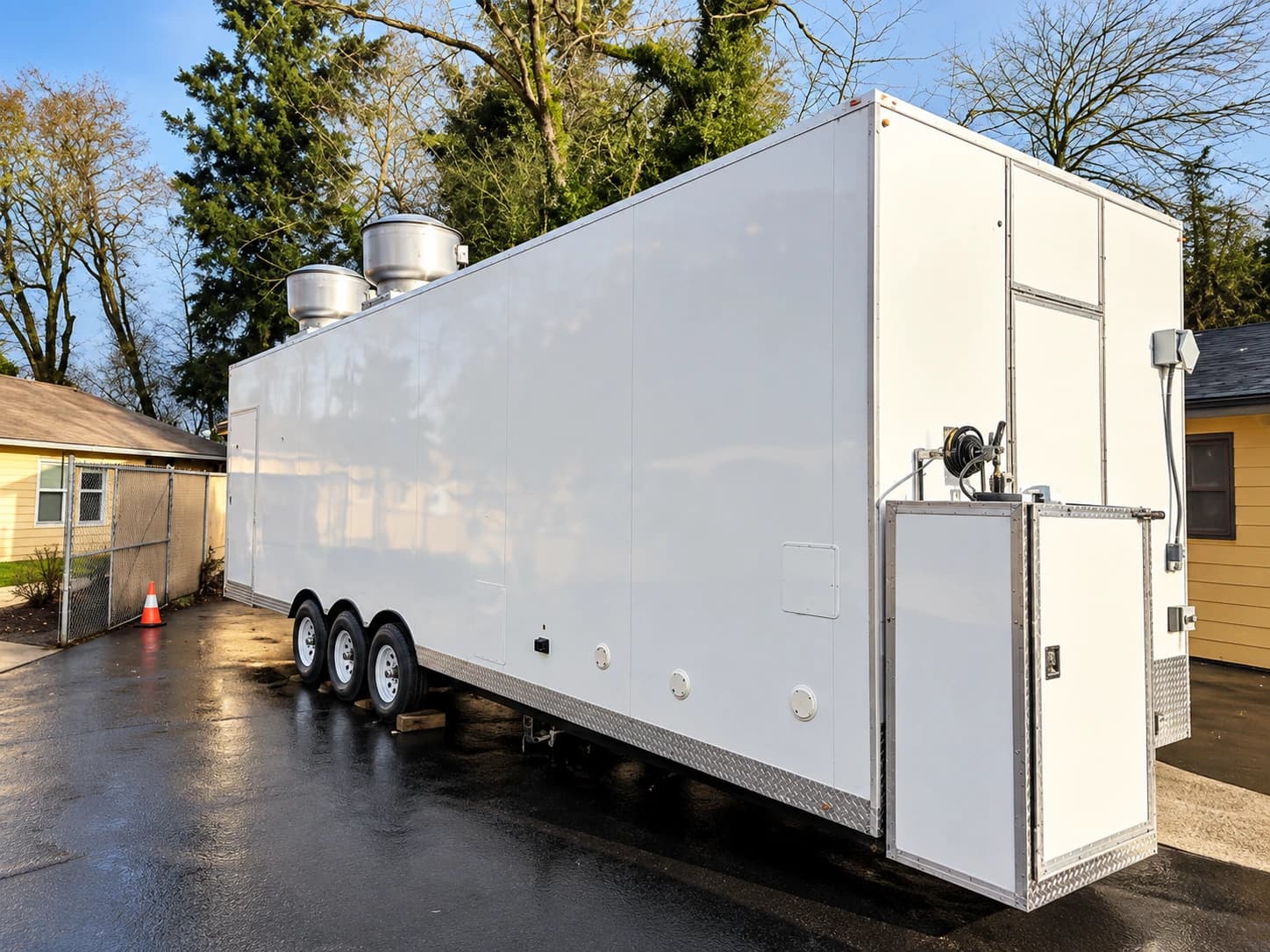
FEMA's resource typing definition for a Mobile Kitchen Unit sorts kitchens by daily meal output: Type 4 up to 750 meals, Type 3 up to 1,500, Type 2 up to 2,500, and Type 1 more than 2,500. The requestor orders the type based on the number of meals needed per day, and FEMA's daily output assumes two serving sessions (FEMA). Use the same number when you call us: tell us the meals per day, the menu, and how many days, and we match the mobile kitchen trailer rental to it. FEMA typing describes capability; it isn't a product certification, and we don't claim one.
What the requesting agency arranges
FEMA's definition puts several jobs on the requestor (FEMA). Plan them before the kitchen arrives:
- Access to fuel (gasoline, diesel, propane) and supporting services: freshwater replenishment and wastewater removal.
- Compliance with food safety, sanitation, solid waste, and other public health requirements.
- Logistics agreed before deployment: working conditions, length of deployment, security, lodging, transportation, and meals for the crew.
Cold storage and dishes
Donated and delivered food needs safe cold holding, especially when the power is out; USDA's emergency food safety guidance covers how long refrigerated and frozen food stays safe. A refrigeration trailer next to the kitchen keeps the supply chain cold, and a dishwashing trailer lets a long deployment switch from disposables to reusable serviceware.
Plan around the season
Ready.gov lists the Atlantic hurricane season as June 1 to November 30 (Ready.gov), and western counties plan around wildfire season (Ready.gov: Wildfires). Demand for kitchens peaks when a storm or fire hits, so agree sizes, sites, and contacts in advance. Coastal and mountain towns such as Apalachicola, Grand Isle, Manteo, and Salida often have one road in, which makes a pre-agreed staging site even more useful.
Crews need more than meals
Base camps also need showers, restrooms, laundry, and sleeping space. See our crew sanitation guide and the rental calculator to estimate a full camp, then call 24/7 with the incident location.