Start the clock the moment it fails
A walk-in cooler or freezer that stops holding temperature is a food safety emergency, not a maintenance ticket. USDA's Food Safety and Inspection Service says a refrigerator will keep food safe for up to 4 hours, and a full freezer will hold its temperature for approximately 48 hours, or 24 hours if it is half full (USDA FSIS). Those figures assume the doors stay closed, so the first rule is simple: stop opening the box.
The temperature line that matters is 40°F. USDA's refrigeration guidance says refrigerators should be set to maintain 40°F or below, that bacteria grow most rapidly between 40 and 140°F, and that foods held above 40°F for more than 2 hours should not be consumed (USDA FSIS).
A checklist for the first hour
- Keep every door closed and post a sign so staff don't open it.
- Record the current temperature and the time, then check it on a schedule. That log is what your health inspector and insurer will ask for.
- Call your refrigeration contractor and ask for an honest repair estimate in hours, not "soon."
- If the estimate runs past the holding times above, call our 24/7 line for an emergency refrigeration trailer rental.
- Plan where the trailer will park: close to your receiving door, on level ground, with power nearby.
How a refrigerated trailer takes over
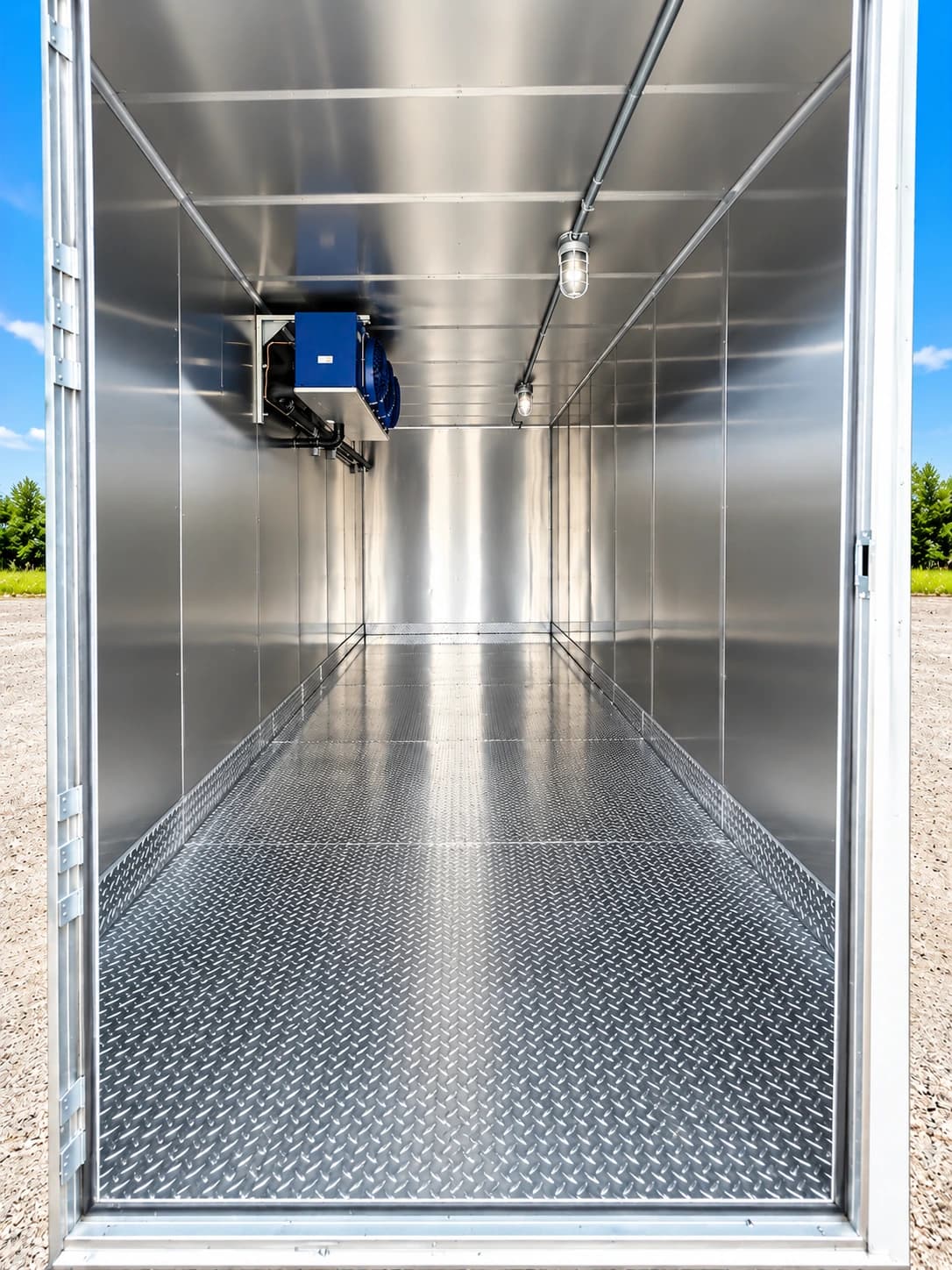
Our 20 ft refrigerated trailers come in two versions: a medium-temperature unit listed at 15°F and a low-temperature unit listed at -5°F, both on 220V single-phase power at 40 to 60 amps. Those are the inventory's listed points, so confirm the setpoint you need when you call. For longer outages, 20 ft and 40 ft refrigerated containers add ground-level storage. Refrigeration starts from $1,895 a month; the rental calculator shows a preliminary figure for your setup.
If the failure is part of a bigger problem, such as a fire, flood, or a kitchen renovation, the refrigeration can join a mobile kitchen trailer and a dishwashing trailer on the same delivery plan.
Plan before the next one
Federal preparedness guidance recommends planning for outages before they happen (Ready.gov) and building continuity plans for your operation (Ready Business). For a kitchen, that plan can be as short as a thermometer log, a contractor's number, and ours.