Who approves a temporary kitchen
Food service rules in the United States are set by state, local, and tribal governments, not by one national permit. FDA publishes the Food Code as a model, and local, state, tribal, and federal regulators use it to build or update their own food safety rules (FDA Food Code). FDA notes that the 2026 Food Code is its most recent full edition. Your state may have adopted an earlier edition, with its own changes, so the rules that apply are the ones your health department enforces.
In practice, the review for a mobile kitchen trailer rental usually happens at the county or city health department where the trailer will park. Start there, and ask whether the state agency also needs to sign off. Our state-by-state resource guide lists the state agencies we could verify for each state.
What to send the health department
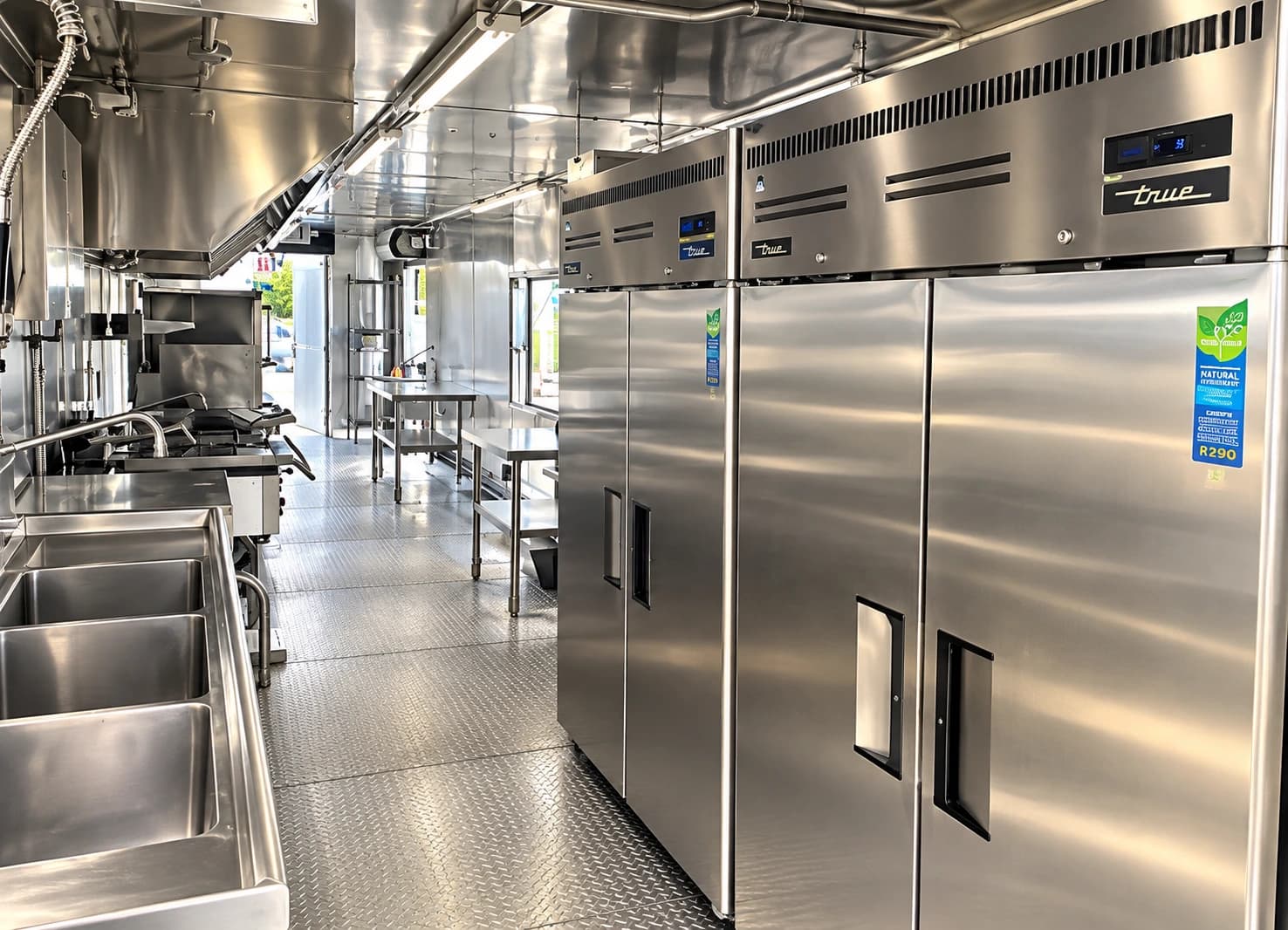
- Equipment list. Each kitchen page lists its cooking, sink, and refrigeration equipment; we send the list for the unit assigned to you.
- Electrical data. Our kitchens list 220V single-phase service at 200 to 220 amps.
- Water and wastewater plan. Whether you connect to potable water and sewer, or use tanks and pump-out service.
- Site plan. Where the trailer parks, the path to your serving line, and where waste goes.
- Dishwashing method. A dishwashing trailer or the three-compartment sink in the kitchen.
Handwashing is the easy item to miss
CDC explains that handwashing is one of the most effective ways to prevent the spread of illness (CDC). Every kitchen we list includes a handwashing sink. Outdoor serving lines, crew dining areas, and events often need more, which is where a handwashing sink trailer helps.
Timing
Ask about review times when you first call the health department, and book the trailer around that date. For planned renovations, start the conversation as soon as the construction schedule is set. For emergencies, call the department and our 24/7 line the same day; many departments have a path for urgent temporary operations. FDA's retail food protection program supports the state and local regulators who make these decisions.